 Rachel Thompson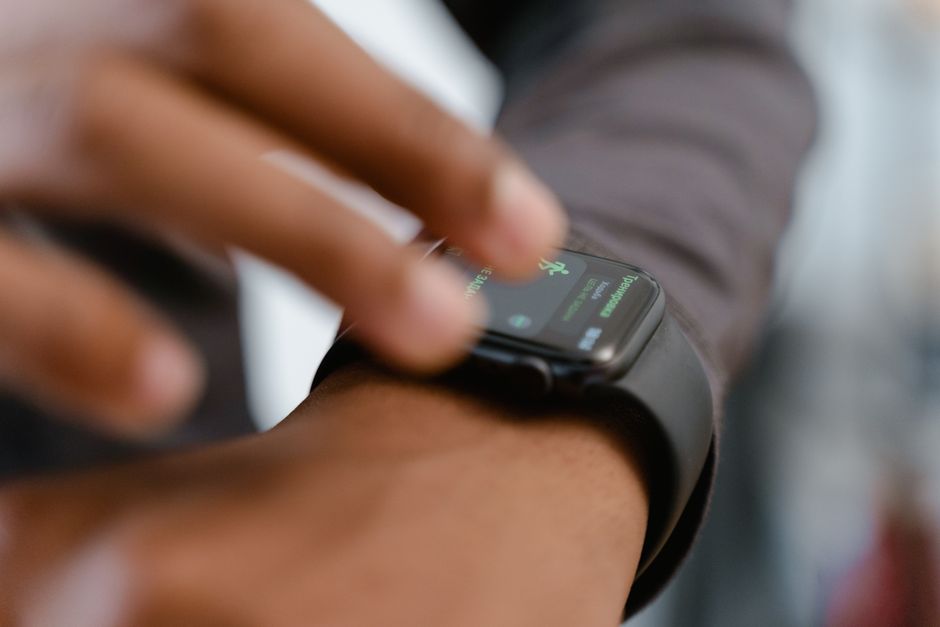
Picture this: you’re three weeks out from a rear-end collision. Your neck still aches, you’ve cut back your morning runs, and you’ve told the insurance adjuster exactly that. What you haven’t thought about is the Fitbit on your wrist that logged a 4.2-mile walk last Tuesday, the Uber app that shows you requested six rides in two weeks (suggesting you weren’t housebound), and the GPS on your own car that recorded a 90-minute round trip you’d honestly forgotten about. The adjuster has thought about all of it.
This is the reality of injury claims in mid-2026, and it catches people completely off guard. I’ve seen claimants genuinely baffled when their settlements came in far below what they expected, never connecting the dots between their digital footprint and the insurer’s sudden confidence in a low offer.
The Devices Watching You After an Accident
Most people know, vaguely, that insurance companies look at social media. That ship sailed years ago. What most people don’t realize is how much further the data collection has gone.
According to a Los Angeles truck accident attorney quoted in Lawyer Monthly in May 2026, defense teams are now routinely pulling smartwatch activity logs, GPS records, ride-share history, delivery app usage, and vehicle telematics data to contradict what injured people say about their own limitations. That’s a wide net. Think about everything that generates a timestamp and a location in your daily life, and you’re starting to understand the scope.
Your car’s Event Data Recorder, often called a black box, captures speed, braking force, and steering inputs in the seconds before a crash. That same technology, in the form of fleet telematics, has been standard in commercial trucks for years. Interestingly, California is now expanding regulatory requirements for commercial operators to retain that telematics data for specified periods, which can actually work in an injury victim’s favor when it comes to proving what a truck driver was doing before impact. But the data sword cuts both ways.
Wearables are the part that surprises people most. Your smartwatch doesn’t know you’re in pain. It knows your step count, your heart rate, your sleep patterns, and your active minutes. If you told an adjuster you can barely get off the couch, and your Garmin logged 8,000 steps on three different days that month, that’s a problem. Defense attorneys know exactly how to frame that discrepancy.
Why AI Has Changed the Stakes Completely
Helpful resource: Smead Accordion Expanding File Folder for Legal Files is a top-rated option for this. (As an Amazon Associate this site earns from qualifying purchases.)
Insurance companies have always used data. What’s different in 2026 is that AI-driven tools are now doing much of the initial claim evaluation at major insurers, comparing your claim against enormous historical databases and generating settlement ranges almost automatically.
Critics of these systems, including attorneys cited by the California Accident Attorneys Blog in May 2026, point out that AI evaluation tools often rely on incomplete data and formulas that are built around the insurer’s historical outcomes rather than the full picture of your individual injury. The system doesn’t know that your job requires physical labor, or that your doctor told you light walking was therapeutic, not evidence of recovery. It just sees the numbers.
The financial pressure driving this is real. Swiss Re analysis found that liability claim severity has increased 57% over the past decade, pushed higher by large jury verdicts. Insurers are fighting back with data, and the AI tools are a direct response to that trend. From the insurer’s perspective, this is risk management. From the injured person’s perspective, it can mean a lowball offer that arrives with an air of finality it doesn’t deserve.
What I want you to take from this is not paranoia, but awareness. An offer generated or influenced by an algorithm that has access to your fitness tracker data, without your attorney having the chance to provide context, is not necessarily a fair offer. It may just be the number a formula produced.
Your Digital Footprint Can Work For You, Too
Here’s the part that often gets lost in these conversations. Digital evidence isn’t only a threat to injury claimants. It can be powerful proof on your side, if you know to preserve it.
Your fitness tracker data from before the accident establishes a baseline. If your average daily steps dropped from 9,000 to 2,000 after the crash and stayed there for months, that’s objective documentation of functional decline. Screenshots, data exports from your device’s app, and records requested directly from the manufacturer can all tell that story.
The same applies to vehicle telematics from the at-fault driver’s vehicle. Those black boxes capture what happened in the critical seconds before impact. In commercial vehicle cases especially, California’s expanding data retention requirements mean that evidence may be legally required to exist. An attorney can send a spoliation letter, essentially a legal notice demanding that specific data be preserved before it’s overwritten or deleted, often within days of an accident. Missing that window can mean losing evidence you can never recover.
Ride-share history and GPS records can also confirm that you sought medical care repeatedly, that you didn’t take certain trips, or that your activity patterns genuinely changed. The same data the other side wants to weaponize can be reframed, with context, in your favor.
The Legal Landscape Is Shifting Fast, and Not All of It Is Settled
Several states, including Arizona, Colorado, Georgia, Kansas, Montana, Oklahoma, and Tennessee, adopted new litigation funding and digital-evidence disclosure laws in 2025. That’s a significant wave of legislative activity in a short period, and it signals that courts and legislatures are actively trying to catch up with technology that has outpaced old rules.
At the federal level, the proposed AI LEAD Act (AI Liability for Error and Damage Act) would create accountability frameworks for AI-related harms, including, potentially, AI systems that generate inaccurate insurance evaluations. As of mid-2026, it has not been enacted. That matters because right now, there’s limited recourse if an AI system quietly undervalues your claim based on flawed data inputs. The law is genuinely still catching up.
What this means practically is that the rules about what data can be requested, when it must be disclosed, and how it can be used in litigation are in flux depending on where you live. That’s not a reason to feel helpless. It’s a reason to talk to someone who tracks these developments closely before you accept any settlement.
What to Do Before You Talk to an Adjuster Again
You don’t have to delete your fitness apps or leave your phone at home, and honestly, doing so after an accident could look suspicious. What you should do is stop treating your devices as a private journal. Anything logged is potentially discoverable.
Be honest with your medical providers about your actual activity levels. If your doctor says gentle walking is fine and you’re doing it, document that instruction. Context is everything, and “my physical therapist told me to walk” is a very different story than the raw step count alone tells.
Get legal advice before you provide a recorded statement, sign any medical authorization releases, or accept any offer. Not because you’re hiding something, but because the system that will evaluate your claim has access to information and analytical tools you don’t, and an attorney can help level that playing field. This isn’t a situation where waiting costs nothing.
The data landscape for injury claims has changed more in the past two years than in the previous twenty. The injured person who walks in assuming good faith and a straightforward process is the one most likely to walk out with less than they deserve.
Sources
- Personal Injury Law Trends 2026: AI, Digital Evidence & Insurance Tactics , Lawyer Monthly (May 18, 2026)
- How AI and Technology Are Changing California Personal Injury Claims in 2026 , California Accident Attorneys Blog (May 15, 2026)
- AI in Insurance Claims: Impact on the Injured in 2026 , Coruzant (February 23, 2026)
- 2026 Marks Turning Point in War Against Litigation Financing: CSAA Legal Chief , Insurance Business (February 10, 2026)
- How Insurance Companies Use AI to Evaluate Injury Claims , Carter Wolden Curtis (December 18, 2025)
This article is for general informational purposes only and does not constitute legal advice. Laws vary by state. Consult a licensed personal injury attorney in your jurisdiction for advice specific to your situation. Most personal injury attorneys offer free consultations.
Recommended Resources
Disclosure: As an Amazon Associate, we earn a small commission from qualifying purchases at no extra cost to you. We only recommend products that genuinely support the topics covered in this article.
- Victim to Victory: A Personal Injury Survival Guide (~$16), Written by a personal injury attorney, explains the full claims process, how insurance companies calculate settlements.
- Navigating Personal Injury Claims (~$14), Covers the pre-litigation claims process step by step, medical documentation, negotiation tactics, and what to expect.